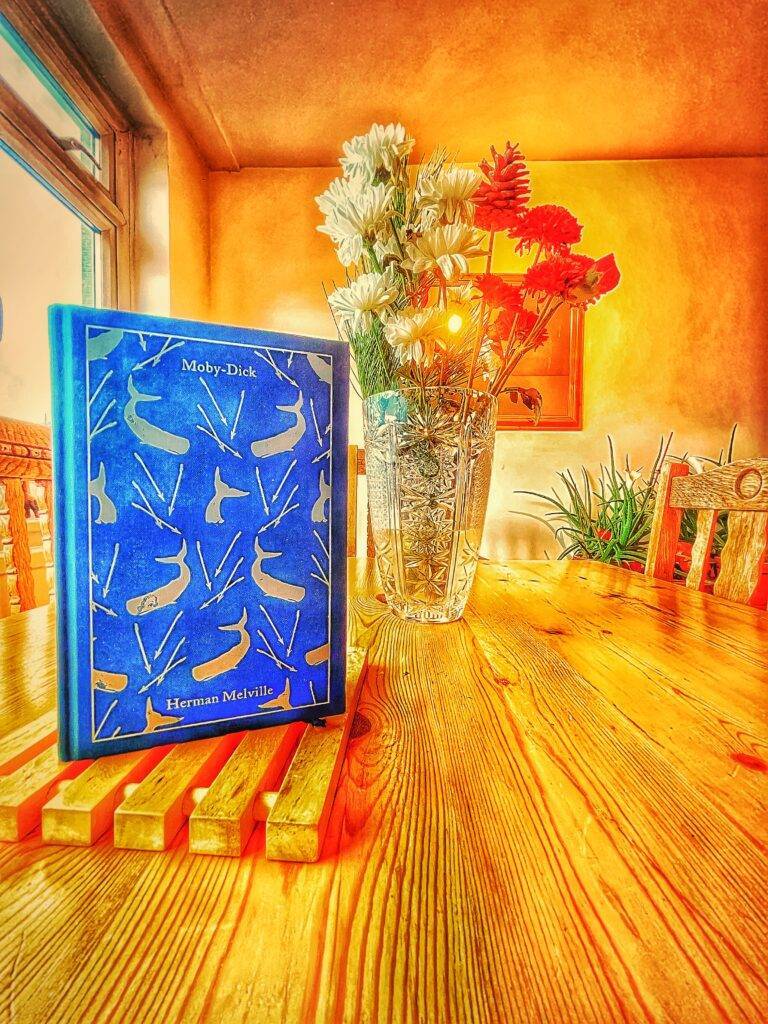
In Herman Melville’s classic novel Moby-Dick, the white whale serves as a powerful symbol of the mysterious and untamable forces of nature that humans have long tried to conquer. With its stark whiteness and immense size, this elusive creature embodies the awe-inspiring power and majesty of the natural world. In contrast, the Pequod, the whaling ship at the heart of the story, represents a microcosm of society, with its diverse crew members standing in for the many different facets of humanity. From the surly and violent Queequeg to the pious and righteous Starbuck, each member of the crew embodies a unique aspect of the human experience, and together they form a complex and volatile community that is both fascinating and terrifying to behold. Through these two symbols, Melville explores the timeless themes of power, identity, and the struggle between man and nature, creating a masterpiece of American literature that continues to captivate readers to this day.

“Dantès’ story is one of great injustice and perseverance. The fact that he has been unjustly imprisoned is a travesty, and it seems that there are many who are content to see him detained. Despite this, Dantès does not give up hope and instead spends years desperately seeking an opportunity to prove his innocence. Unfortunately, his efforts only seem to make his situation worse, and he finds himself on the brink of oblivion. In a single day, young, strong, and on the waves of success, he is going to lose a father, a prosperous career, and a loved one. However, just when it seems that all is lost, Dantès meets an educated Italian older man who becomes both a father and a teacher to him. Together, they devise a plan to escape from prison and regain the justice that Dantès deserves. It is a risky plan, but Dantès is more than ready to take the leap and finally leave behind the years of suffering that he has endured. As he prepares to escape, Dantès feels the weight of all that he has been through. Every moment of pain and suffering, every injustice that he has faced, seems to be pressing down on him. But he knows that he has only one mission now: to make his way to the island of Monte Cristo, where he hopes to finally find the justice and freedom that he has been denied for far too long. With the help of his new mentor and friend, Dantès sets out on a journey that will test his limits and challenge everything that he thought he knew about himself and the world around him.”
My newsletter on psychology and creative writing. Here you’ll also find my journey as a novelist and translator. Right now, you’ll find excerpts from the novel Lands of Solitude, which I’m currently translating.